The Silicon Curtain: How Dual Smuggling Scandals and an Intelligence Probe Shatter Nvidia’s Export Control Defense

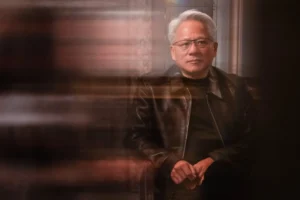
For more than a year, Nvidia Chief Executive Officer Jensen Huang maintained an unwavering public stance regarding the clandestine global movement of his company’s high-performance artificial intelligence semiconductors: there was no credible evidence indicating that Nvidia hardware was being systematically diverted to restricted markets like China in violation of U.S. export controls. Time and again, Huang dismissed reports of black-market routing, assuring shareholders, regulators, and the
public that the semiconductor giant’s supply chain remained airtight.
Today, that defensive wall has been severely compromised. Two sprawling, multi-billion-dollar scandals centered in Southeast Asia have detonated beneath Nvidia’s compliance architecture, shattering the credibility of Huang’s assurances. The first crisis involves Super Micro Computer, a longtime server partner led by Charles Liang, a close personal friend of Huang. Super Micro faces intense federal scrutiny over a massive $2.5 billion scheme utilizing fabricated server configurations. More recently, investigations have enveloped Nvidia’s largest Southeast Asian customer, Megaspeed International, which is now the target of a sweeping U.S. probe into unauthorized semiconductor diversion and alleged foreign intelligence recruitment.
While investigators have yet to formally establish a direct operational link between the Super Micro and Megaspeed incidents, the dual inquiries have cast an unprecedented pall over Nvidia. The compounding pressure—spanning executive infidelity, potential espionage, regulatory subpoenas, and impending congressional interrogations—has left Wall Street analysts, institutional shareholders, and the company’s executive leadership scrambling to contain a multi-faceted crisis that threatens to fundamentally alter the regulatory landscape of the global artificial intelligence boom.
Anatomy of the Silicon Gray Market and U.S. Export Controls
At the heart of the controversy are Nvidia’s Graphics Processing Units (GPUs), highly specialized silicon components that serve as the foundational infrastructure for training and operating advanced generative artificial intelligence models, such as those developed by OpenAI and Anthropic. Because these advanced processors possess immense computational capability with potential military and strategic applications, the U.S. Department of Commerce’s Bureau of Industry and Security (BIS) classifies them as dual-use technologies.
Under stringent federal export controls, American companies are legally barred from shipping high-powered chips directly to entities in restricted nations, including China, without specialized government licenses—authorizations that have largely been denied for Nvidia’s cutting-edge architectures, such as the H200 and B200 series. To circumvent these regulatory bottlenecks, international smuggling rings have increasingly relied on complex transshipment networks, routing hardware through third-party intermediaries in Southeast Asia, the Middle East, and other regions to mask the ultimate end-users.
Nvidia’s official compliance policy has historically placed significant reliance on the due diligence of its network of original equipment manufacturers (OEMs), distributors, and direct enterprise customers. However, critics and regulatory watchdogs argue that the company’s hyper-focus on capturing explosive market demand during the global AI hardware race created systemic vulnerabilities within its auditing and oversight mechanisms.
The Human Element: Executive Infidelity and the Intelligence Probe
The crisis took an extraordinary turn into the realm of geopolitical espionage when Jensen Huang confessed to employees via email that he had engaged in an extramarital affair with Alice Huang (no relation), a former executive at Megaspeed International—Nvidia’s premier semiconductor buyer in Southeast Asia.
Intelligence officials have reportedly briefed stakeholders that Alice Huang may have been recruited by China’s Ministry of State Security to act as an intelligence asset, tasked with gathering operational intelligence on Jensen Huang and monitoring Nvidia’s strategic movements. In response to these developments, Nvidia’s board of directors announced the appointment of an independent investigation headed by Joon H. Kim, acting U.S. Attorney for the Southern District of New York, alongside the elite legal firm Wachtell, Lipton, Rosen & Katz.
While the board has stated it maintains confidence in Jensen Huang and has found no initial evidence that national security or proprietary corporate secrets were compromised, the intersection of executive vulnerability and foreign intelligence operations has fundamentally changed the nature of the inquiry. Export-control experts note that allegations involving potential honey-trap operations carry far greater political and public-interest momentum than technical trade violations, ensuring that the scandal will not easily dissipate as a mere administrative oversight.
Scandal One: The Super Micro Computer Investigation
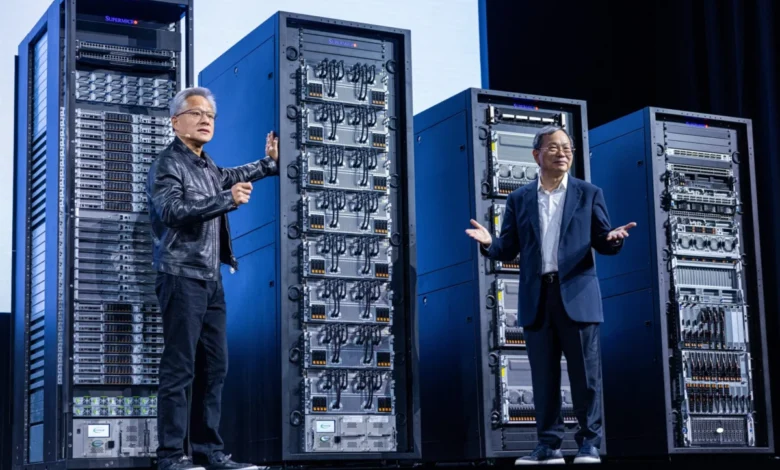
Long before the revelations surrounding Megaspeed, Nvidia’s supply chain integrity was called into question through its deep corporate relationship with Super Micro Computer. Founded in 1993—the same year Jensen Huang launched Nvidia—Super Micro and its chief executive, Charles Liang, enjoyed a famously cozy relationship with Nvidia’s leadership, frequently sharing keynote stages at international technology expos like Computex in Taiwan.
The partnership turned turbulent in March when federal prosecutors unsealed an indictment against Super Micro co-founder Yih-Shyan “Wally” Liaw and two co-conspirators. The indictment alleged that the individuals orchestrated a sophisticated scheme to route approximately $2.5 billion worth of servers equipped with advanced Nvidia H200 and B200 GPUs to restricted entities in China via a Southeast Asian front company.
According to federal court filings, the operation relied on elaborate deception. Conspirators allegedly staged thousands of non-working dummy servers across three distinct warehouses to deceive compliance auditors. Contractors reportedly used household hair dryers to soften the adhesive on serial-number labels, peeling them off to obscure the hardware’s provenance.
Court documents further revealed that the front company—identified by financial analysts and reporting outlets as OBON, a Bangkok-based AI infrastructure firm—leveraged its projected procurement volumes to secure guaranteed chip allocations from Nvidia. While Super Micro was not criminally charged and maintained that it was a victim of the scheme, the company has since received grand jury subpoenas from the U.S. Attorney’s Office for the Southern District of New York, alongside inquiries from the SEC and the BIS. One of the co-defendants in the case entered a guilty plea, while Liaw’s trial has been postponed to March 2027 as defense attorneys review massive tranches of internal Super Micro documentation.
Scandal Two: Megaspeed and the Southeast Asian Hub
Parallel to the Super Micro proceedings, Nvidia has been forced to confront mounting scrutiny over Megaspeed International. Over the past two years, Megaspeed reportedly purchased more than $4.8 billion in Nvidia processors, with nearly $2 billion of that hardware deployed into massive data center installations across Malaysia and Indonesia. Investigative reporting by The New York Times and analyses by short-selling firms such as Culper Research suggested that these facilities were utilized to provide remote computing access to Chinese firms barred from purchasing the hardware directly.
Throughout late 2025 and early 2026, Nvidia repeatedly defended Megaspeed’s credibility. Company representatives asserted that corporate compliance teams had conducted physical site visits to Megaspeed operations and found no tangible evidence of chip diversion. Nvidia publicly characterized the allegations as thoroughly investigated and debunked, while Jensen Huang dismissed his interactions with Alice Huang as entirely normal.
However, subsequent financial and investigative disclosures drew direct lines between Megaspeed’s procurement patterns, the Super Micro smuggling network, and broader transshipment pipelines. Archival web data indicated that Megaspeed had previously listed Super Micro as a core technological partner, cementing industry suspicions that multiple channels were actively feeding restricted silicon into mainland Chinese markets.
Chronology of Events
- 1993: Nvidia and Super Micro Computer are founded, beginning a decades-long industrial partnership characterized by close personal ties between CEOs Jensen Huang and Charles Liang.
- December 2024: Conspirators allegedly coordinate monthly hardware forecasts with Southeast Asian front companies to secure priority Nvidia B200 chip allocations, according to federal indictments.
- March 2026: Federal prosecutors indict Super Micro co-founder Wally Liaw and associates for allegedly routing $2.5 billion in Nvidia-powered servers to China using dummy warehouses and modified serial numbers.
- May 2026: Short-selling firm Culper Research publishes a detailed report linking Super Micro, Megaspeed, and alleged transshipment routes feeding restricted AI infrastructure in China.
- June 2026: Senator Elizabeth Warren (D-Mass.) sends a formal congressional inquiry letter to Nvidia’s general counsel demanding comprehensive transparency regarding the company’s compliance and vetting mechanisms.
- October 2025 – September 2026: Nvidia repeatedly assures the public and media that its compliance checks on Megaspeed and regional customers found no proof of unauthorized diversion.
- November 2026: Jensen Huang confesses to an extramarital affair with former Megaspeed executive Alice Huang, prompting the Nvidia board to launch an independent investigation led by prominent legal counsel into potential foreign intelligence targeting.
- November 18, 2026: Three House committee chairs schedule a closed-door congressional briefing for Jensen Huang, timed immediately following Nvidia’s third-quarter financial earnings report.
- January 2027: Democrats assume control of the Senate, positioning Senator Warren to take the helm of the Senate Banking Committee with sweeping subpoena power.
- March 2027: Scheduled federal trial for Super Micro co-founder Wally Liaw.
Legislative Pressure and Broader Implications
The convergence of corporate compliance failures, illicit smuggling rings, and an alleged foreign intelligence honey-trap operation has transformed Nvidia’s regulatory challenges into a major national security priority in Washington.
Following midterm election results that saw Democrats reclaim control of the Senate, Senator Elizabeth Warren is poised to assume the chairmanship of the influential Senate Banking Committee. Observers widely expect that the preliminary compliance inquiries initiated by Warren in mid-2026 will quickly escalate into formal congressional subpoenas. Furthermore, three distinct House committee chairs have formally requested that Jensen Huang appear for a closed-door deposition on Capitol Hill.
For Nvidia, the implications extend far beyond potential financial penalties or regulatory reprimands. The company’s valuation has historically been buoyed by its dominant market share and the perception of unassailable technological supremacy. However, the revelation that billions of dollars in advanced silicon bypassed international controls—coupled with questions regarding executive susceptibility to foreign intelligence operations—poses structural risks to Nvidia’s global supply chain and diplomatic standing.
As independent investigators, federal prosecutors, and congressional committees converge on the semiconductor titan, the era of unmitigated growth and casual dismissals of export compliance risks has definitively ended. How Nvidia navigates the legal, political, and operational fallout in the months ahead will serve as a defining test not only for Jensen Huang’s leadership, but for the entire geopolitical architecture governing the future of artificial intelligence.
Related posts: